Free 7 deadly sins personality quiz
7 Deadly Sins Test: Which Sin Are You?
Asking "which deadly sin am I?" Start here: 25 everyday scenarios, about three minutes, and a personalized result with percentages for all seven sins—not just one label.
How it works
- 1
Answer 25 scenario questions
Everyday moments—work, money, food, arguments. Pick what you would actually think.
- 2
Get all seven percentages
Your dominant sin plus a full breakdown. The second-highest score is highlighted.
- 3
Share, retake, or try virtues
Share from the result screen. Nothing is uploaded. Optional mirror: the seven heavenly virtues test.
Pick an answer to continue — use Back if you want to change one.




Your strongest sin
Your full spread
If Pride leads
Pride is the sin the tradition lists first, and the hardest one to see in yourself. If it leads here, you probably care about being seen as capable, and you hold yourself to a high standard. The useful form of that is ambition; the corrosive form is needing the credit more than the work. Try doing one good thing this week that nobody will ever find out about.
If Greed leads
Greed is not really about money. It is about the belief that enough is never enough — one more deal, one more upgrade, one more backup plan. If it leads here, you are likely good at building and bad at stopping. The useful form is ambition with a budget; the corrosive form is never letting yourself rest. Pick one thing you already have and use it properly this week.
If Lust leads
Lust is wanting to be wanted, and it usually shows up as longing rather than action — the reread message, the person you keep checking on. If it leads here, you probably feel things intensely and give other people a lot of power over your mood. The useful form is warmth and charm. The corrosive form is chasing a feeling that a person cannot actually give you.
If Envy leads
Envy is the only sin that gives you nothing at all. It is the quiet accounting you do when someone else gets the promotion, the trip, the body, the life. If it leads here, you are paying close attention to other people — which means you are also good at reading what works. Turn one comparison into a question: what exactly do they do that I could copy this month?
If Gluttony leads
Gluttony is not just food. It is taking more than you need of anything — the second dessert, the fourth episode, the extra hour of scrolling. If it leads here, you probably use consumption to manage stress. The useful form is enjoying things fully. The corrosive form is never letting a feeling finish. Try one meal or one evening this week where you stop at enough.
If Wrath leads
Wrath is anger that arrives faster than thought, and it usually protects something real — dignity, fairness, someone smaller than you. If it leads here, you probably have a strong sense of how things should be. The useful form is the willingness to say the hard thing. The corrosive form is paying interest on insults long after everyone else has forgotten. Give yourself an hour before replying.
If Sloth leads
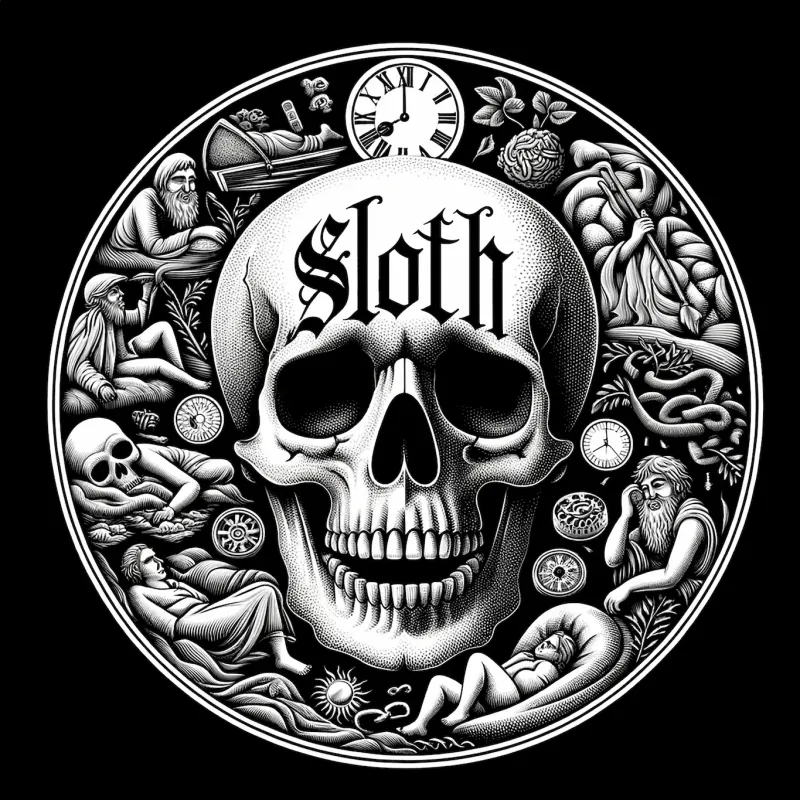
Sloth is not laziness; it is the quiet refusal to engage with the thing that matters. If it leads here, you are probably tired, and the tiredness is doing the deciding for you. The tradition called it acedia — a boredom with your own life. The useful form is rest you actually chose. The corrosive form is rest you never chose. One small real action beats a whole day of planning to start.
How scoring works & what the seven sins mean
What this 7 deadly sins test does
This is a short, honest quiz about ordinary moments — a promotion, a buffet, a group chat, a friend's new car. You answer 25 questions, and the test turns those answers into seven percentages, one for each of the seven deadly sins. The highest number is your dominant sin.
Most quizzes of this kind hand you a single label. The spread is more interesting. Almost nobody is one sin and nothing else. Most people land somewhere around 24% pride, 19% envy, 15% sloth, and a long tail behind that — and the second number is usually the one that stings.
How the scoring works
Each of the four answers to a question adds points to one or two sins. Some questions have an obvious pull; others are deliberately soft, because the honest answer to a question about a buffet is not always the flattering one. After question 25, the points are converted into percentages that add up to 100%, and the biggest share becomes your result.
Everything happens in your browser. No answer leaves the page, there is nothing to sign up for, and reloading the page puts you back at question one.
What the seven sins actually mean
The list is older than the word "deadly". It started as a set of eight thoughts that monks were told to watch for, and it was Gregory the Great in the sixth century who trimmed it to seven: pride, greed, lust, envy, gluttony, wrath and sloth.
Pride was the one that worried them most, because it quietly justifies everything else. Greed was not really about money — it was about the belief that enough is never enough. Lust was less about sex than about wanting to be wanted, and letting that want make your decisions. Envy was considered the strangest of the seven, because it is the only one that gives the person feeling it nothing at all.
Gluttony was never just about food; it was about taking more than you need of anything. Wrath was anger that moves faster than thought, which is why the old advice was always to wait. And sloth, the one everybody misreads, was not laziness. Its Latin name was acedia, and it meant a kind of boredom with your own life — the refusal to engage with the thing that actually matters.
How to read your result
Your dominant sin is the one that scored highest, but the second one usually tells you more. A high pride with high envy reads differently from high pride with high sloth. If two numbers are within a point of each other, treat it as a tie: the test has 25 questions, and one point is not a verdict.
What the result does not tell you is that any of this is bad. The old list was written for self-examination, not for ranking people. A sin with a useful side is still a sin with a useful side: pride drives ambition, wrath defends other people, gluttony is the capacity to enjoy things. What matters is knowing which one pulls hardest on you and noticing when it is pulling.
What this test is not
It is not a diagnosis, a confession, or anything a psychologist would sign. It is a quiz built around a very old list of human weaknesses, with 25 questions written to be answered quickly and honestly. If a result makes you laugh at yourself, it has done its job. If it makes you think about one small habit for a day, it has done more than most quizzes.
Take it, then take the mirror version
When you are done, the same format runs in the opposite direction: a seven heavenly virtues test, with humility, charity, chastity, patience, temperance, diligence and kindness. Most people score differently on the two, and the gap between them is the interesting part.
The seven deadly sins, briefly
Pride
The root sin in most lists: the belief that you are the centre of the story.
Greed
The endless appetite for more than you need, usually dressed up as security.
Lust
Wanting to be wanted, and letting that want make your decisions.
Envy
Pain at someone else's good fortune — the one sin that gives you nothing.
Gluttony
Taking more than you need of anything, from food to attention.
Wrath
Anger that moves faster than thought, often protecting something real.
Sloth
The quiet refusal to engage with the thing that actually matters.
Questions people ask before taking it
How is this different from a one-word quiz result?
Many sites give you a single sin name. This test is built for the spread: you see how pride, greed, lust, envy, gluttony, wrath, and sloth rank in your answers, so a close second place still shows up.
Can I share my deadly sin result?
Yes. On the result screen, tap Share my result to use your phone's share sheet, or copy a message with the link. You can also hit Take again without leaving the page.
Do I get personalized scores for all seven sins?
Yes. Every answer adds points to one or two sins. At the end you see seven percentages that add up to 100%, your dominant sin at the top, and a short read on that sin. The runner-up score is called out in the subtitle under your result.
Is this a real personality test or just for fun?
For entertainment and self-reflection only. It is not a clinical personality assessment, diagnosis, or religious confession. The questions use the old seven-deadly-sins list as a mirror on everyday habits—not psychology lab science.
Where can I take a "Which Deadly Sin Am I?" quiz online?
Right on this page. Scroll to the questions (or tap Start the test), answer all 25, and you get your dominant sin plus a percentage bar for each of the seven. No account, no download—works on your phone.
How is the result calculated?
Every answer adds points to one or two sins. At the end, your points are turned into percentages that add up to 100%, and the highest share is your dominant sin. The scoring runs in your browser, so nothing is sent to a server.
Is this test free?
Yes. There is no sign-up, no email required, and no paywall. The whole test takes about three minutes on a phone.
Do you store my answers?
No. The questions are scored in your browser and the answers are never uploaded. Reloading the page starts you from question one.
Are the seven deadly sins in the Bible?
Not as a list. The seven deadly sins come from later Christian tradition, most famously the list fixed by Gregory the Great in the sixth century, and were used as a framework for self-examination rather than as a personality system.
Which sin is the worst one?
The tradition usually puts pride first, on the theory that every other sin needs it. In practice the test does not rank sins as good or bad: it shows which one pulls hardest on you, and that is the one worth watching.